A Golden Age of Popes

popeBenedictXVIHere is a little piece I wrote a couple years ago for the Church of the Holy Communion newsletter – PSA

Fr. Sanderson and I have been sharing the duty of teaching candidates for the vocational diaconate (sometimes called “permanent” deacons, like our own Deacon Smith, as opposed to “transitional” deacons who will in due course be ordained to the priesthood) in the Diocese of South Carolina, which has been a bit of work but a great pleasure, because we – I think I can speak for Fr. Sanderson here – enjoy both the subject and also the students.  Over the past couple months, I’ve had the pleasure of talking with the students about the church from the end of the western Roman Empire through the medieval period.  And of course a great deal of that history focuses on the successive bishops of Rome, the Popes.  So we have encountered men such as Pope St. Gregory the Great (540-604), a man in whom holiness of life, learning, evangelical zeal, courage, humility, and above all love were combined in such a way that the appellation magnus – “the Great” – hardly does him justice.  From that height we descended all the way to Pope Alexander XVI (1492-1503), a warmonger of whom it was said that he publicly and brazenly reveled in all the deadly sins except for gluttony, for he suffered from chronic indigestion, poor man.

Reacquainting myself with this turbulent history (and how could expect the history of the successors to the See of Peter to be anything but turbulent?) has caused me to be thankful for the particular historical moment in which we find ourselves.  To be sure, there are wars and rumors of wars, the economic forecast  is dark with a chance of black, and there is no need here to list instances of social and artistic debasement in a culture shorn from its religious roots as, all the while, the Church bleeds from self-inflicted wounds.  But, for all that, the fact is we live in a golden age of popes.

Blessed John Paul II is a hero for this or any age, shining the clear and clarifying light of the Gospel on to the dehumanizing ideologies of Nazism, Communism, Secularism, and our own American consumerism (which, every bit as much as Communism, threatens human dignity and freedom by reducing men and women to means to be used rather than goods to be honored).  And he did this not just by his teaching, but in the example of his own life in which he personally, fearlessly, and at great cost embodied that liberating Gospel light.  Both the Gestapo and the KGB had thick files on John Paul.  For his history in the midst of the roiling totalitarian ideologies of the 20th Century, I cannot recommend too highly George Weigel’s two-volume biography:  Witness to Hope and The End and the Beginning.

Less dramatically but just as powerfully, Pope Benedict XVI is placing the stamp of Christ’s love on the Church in our time.  The theologian Bruce Marshall recently had this to say about the Holy Father:

…In his actual exercise of the Petrine ministry he more resembles Gregory the Great than that other ancient saint who is his namesake. Leading a twenty-first-century Church much diminished in power and influence throughout Europe, Pope Benedict XVI manifests a similar trust in the renewing power of the gospel, devoting much of his papacy to a persistent effort of clear, precise, and attractive teaching that seeks to transmit rather than innovate, to inform rather than speculate. As pope, the former professor of theology has been above all a catechist.

In countless public presentations he has spoken in plain terms of the prophets and the apostles, the Fathers, saints, and doctors of the Church, confident that their insight and example will prove pertinent to his twenty-first-century hearers. (During the summer of 2008, I heard him talk for close to half an hour, at a Wednesday audience under the warm Roman sun, of the historical and contemporary significance of Isidore of Seville.) In the many books gathered from these theological talks, in book-length interviews before and after becoming pope, and in his homilies, encyclicals, and apostolic exhortations, Benedict XVI has striven to teach the faith to a generation that, within and without the Church, is confused about it, puzzled by it, and hostile to it—to the generation of barbarians among whom most of us must, to some extent, also number ourselves. (First Things, October 2011)

For an entry into the thought of this papal catechist, one could do no better than to begin with Benedict’s two-volume Jesus of Nazareth [now three volumes].  Or, this being the age of the internet, nearly every word which proceeds from his mouth or pen is readily available via the magic of the web.  The Vatican of course has a website (vatican.va), but I find an easy to use site is the news site Zenit (zenit.org).  I often go there to read the Pope’s homilies, and thus to get a “second opinion” (usually as a corrective to my own).

We live in a golden age – don’t let it pass you by!

A Te Deum Today

Straight from Ordinariate HQ:

Note on the Solemnity of the Chair of St. Peter

In his statement on February 11, 2013, our Ordinary, Msgr. Steenson, reminded us that “members of the Ordinariate are in a particular way the spiritual children of His Holiness Pope Benedict XVI,” and Msgr. Steenson exhorts us, despite some feelings of sadness and a sense of shock, to deeper joy and special gratitude to the Holy Father “for giving us this beautiful gift of communion.”

On Friday, February 22, the Ordinariate of the Chair of St Peter will celebrate its Solemnity of Title, and the Ordinary commends all Ordinariate communities in North America to express their gratitude to Pope Benedict with the singing of a Solemn Te Deum of Thanksgiving (at the conclusion of Mass or Evensong, or as a separate service). After the Te Deum and its versicles, this special rite of thanksgiving may conclude with the following prayer:

Let us pray.
O God, whose mercies are without number, and the treasure of whose goodness is infinite: we render thanks unto thy most gracious majesty for the gifts which thou hast bestowed upon us (and especially for the pontificate of our Holy Father Benedict XVI, and for the gift of communion with the Chair of Peter); evermore beseeching thy mercy that, as thou dost grant the prayers of them that call upon thee, so thou wouldst not forsake them, but rather dispose their way towards the attainment of thy heavenly reward. Through Jesus Christ our Lord, who liveth and reigneth with thee in the unity of the Holy Ghost, one God world without end. Amen.

The Ordinary and the Ordinariate community is aware that the Te Deum is not usually heard during Lent. However, February 22 is the Ordinariate’s Titular Solemnity and should be kept as such according to the Particular Calendar approved by the Holy See. The Te Deum is rightly proclaimed; Friday abstinence may be dispensed; the liturgical color is white; and the Gloria and Creed are said or sung at Mass (the Alleluia is omitted, as throughout the season).

With thankful joy, let us then pray and work that Pope Benedict’s “labors in the vineyard might continue to bring forth a fruitful harvest.”

“A Privileged Sign of the Love of God”

chair-of-peter-255x317Today, on the Solemnity of the Chair of St. Peter, the Titular feast for the Ordinariate in North America, we might well ask, just what is the significance and beauty of this solemnity?  Let Pope Benedict explain it to you and then beseech your prayers

To celebrate the “Chair” of Peter, as we do today, means, therefore, to attribute to it a strong spiritual significance and to recognize in it a privileged sign of the love of God, good and eternal Shepherd, who wants to gather the whole of his Church and guide her along the way of salvation.

Among so many testimonies of the Fathers, I would like to refer to that of St. Jerome, taken from a letter of his to the Bishop of Rome, particularly interesting because he makes explicit reference in fact to the “chair” of Peter, presenting it as the safe harbor of truth and peace. Jerome writes thus: “I decided to consult the chair of Peter, where that faith is found exalted by the lips of an Apostle; I now come to ask for nourishment for my soul there, where once you received the garment of Christ. I follow no leader save Christ, so I enter into communion with your beatitude, that is, with the chair of Peter for this I know is the rock upon which the Church is built! (“Le Lettere,” I, 15,1-2).

Dear Brothers and Sisters, in the apse of St. Peter’s Basilica, as you know, is found the monument to the Chair of the Apostle, a mature work of Bernini, made in the shape of a great bronze throne, supported by the statues of four Doctors of the Church, two from the West, St. Augustine and St. Ambrose, and two from the East, St. John Chrysostom and St. Athanasius.

I invite you to pause before that evocative work, which today it is possible to admire decorated with so many candles, and pray in a particular way for the ministry that God has entrusted to me. Raising one’s gaze to the alabaster glass window that opens precisely above the chair, invoke the Holy Spirit, so that he will always sustain with his light and strength my daily service to the whole Church. For this, as for your devoted attention, I thank you from my heart.

Read the entire mediation here.

Ashes and Life.

Ash Wednesday
2 Cor 5.20b-6.10; Mt 6.1-6,10-21
9 March 2011
Church of the Holy Communion
Fr. Patrick Allen

+ + +

In the most recent issue of the New Yorker, author Meghan O’Rourke has a beautifully written and moving essay reflecting on her beloved mother’s dying and death from cancer.  She writes fondly of her childhood and of her mother’s loving indulgence.

And then she writes,

The summer I was eight, I became preoccupied with the thought that I was going to die. My mother noticed that something was wrong, and would pull me onto her lap and ask me if I was O.K., but I had no words to explain my fear; it seemed too enormous to talk about, or even to write down in my journal. One morning, curled up in my sleeping bag on the couch at our cabin, reading an Agatha Christie mystery, I listened as Liam, playing go fish with my mother, turned to her and said, “I don’t want to die. Do you not want to die? What happens to us when we die?”

And my mother put the cards down and said, slowly, “No, I don’t want to die. But I don’t know what happens to us when we die.”

“It’s scary,” he said.

“Yes, it is,” our mother said calmly. “But it’s not going to happen to you for a long time.”

I was both nauseated and riveted: these were the words I had wanted to say, and couldn’t. Perhaps that was because I knew already that any comfort she could offer would be false.

On this day, this Ash Wednesday, we begin the observance of a holy Lent by confronting the reality that young Liam’s mother so naturally wanted to shield him from, the reality that turned young Meghan’s stomach:  Remember, O man, that thou art dust, and unto dust shalt thou return.

There is of course a kind of commonsense wisdom in such an annual exercise.  We are largely insulated from death in modern society; it happens away from home and is handled clinically by the professionals to whome we have collectively delegated those tasks (or, perhaps, who have contrived and connived to sell us their services).

And so it may be helpful to engage in this kind of memento mori.  To remind ourselves of what is coming, and so to add a sense of urgency to the days we have, how ever many they may be.  You know what I mean:  Carpe diem, “seize the day!”, as the Roman poet Horace urged, “and put little trust in the future.”  Or, if you prefer your reality therapy in a more prayerful context (I know I do!): Teach me to number my days, O Lord, prays Moses in the 90th Psalm, that I may apply my heart to wisdom.

If that were all we were up to day, I suppose it might still be a thing worth doing, if maybe a little deprssingly so.  A reminder of death does, or should, lead to a certain and real kind of wisdom.  But if that were all we were up to, we might place the day and this dusty rite at just any convenient place in the calendar.  But obviously that’s not the case.  We do this at the beginning of Lent, precisely to make a good and appropriate start to a holy Lent – this season of penitence, prayer, and fasting.

But Lent itself is not just a 40-day period of instensified psycho-social self-help effort:  “In every day, in every way, for 40 days, I’m getting better and better.”  Well, fat chance.  But again, if that’s all we were offering, we could do it any old time.  But of course we’re not.  We observe this Ash Wednesday, and embark together upon this holy Lent, with a particular horizon in view.  We are going somewhere.  We are moving toward the observance of a particular death, on a particular Friday afternoon – a death which would itself have no importance and would long ago have been forgotten had the man involved had the common decency to remain dead.  But Jesus did not.  He gloriously rose again on the third day.  And that’s where we are going; that is where Lent is designed to take us; that is what Lent teaches us to see and to celebrate: eternal life given to us in the victory of Christ over the grave.

Which puts the impostition of ashes today, here at the outset of Lent, in a new light.  It transforms and deepens the wisdom of our self-imposed reminder of death.

Seize the day, indeed.  Apply our hearts to wisdom, absolutely.  But not because life is short and uncertain, but because eternity is nigh, the Kingdom of God is at hand.

In Christ we have infintely better than the dubious and cold comfort offered – though, bless her,  it was all she had to offer – by Meghan O’Rourke’s mother:  “it’s not going to happen to you for a long time.”

We have better.  In Christ we have the victory.  In Christ, today’s ashes and dust are transformed into fertile soil sown with Resurrection, and this life and every day in it is the arena in which we may live the grace of God in Jesus Christ, the grace which has already taken root in our hearts by faith, and which on the last great day will transform our bodies also,  and the perishable will put on the imperishable, and our mortal nature will put on immortality (1 Cor 15.53).

The thing to do then, in this Lent, in this life and every day in it, is to choose life.  Which is another way of saying to repent.  “To be reconciled to God,” as St. Paul urges us in our epistle lesson, to turn from our sins and cling to Christ, “so that in him we might become the righteousness of God.”

The thing to do then, in this Lent, in this life and every day of it, is to “lay up treasure in heaven,” as our Lord urges us, and to place our hearts and hope there, so that today, even with the dust of death on our foreheads, and everyday, we may “prepare with joy for the Paschal feast,” which is the mystery of eternal life in Jesus Christ.

+ + +

The Ordinary on the Resignation of Benedict XVI

From Monsignor Steenson:

Statement from the Ordinary of the
Personal Ordinariate of the Chair of St. Peter
On the Resignation of Pope Benedict XVI

February 11, 2013

We members of the Ordinariate are in a particular way the spiritual children of His Holiness Pope Benedict XVI.  Throughout his years as Prefect of the Congregation for the Doctrine of the Faith and especially as Pope, the reconciliation of Anglicans to the Catholic Church has been one of his principal tasks.  Our hearts are saddened to receive the news that Pope Benedict will step down from the Chair of Peter, but there is a deeper joy knowing that we are the fruit of his vision for Catholic unity.  And we will pray and work diligently to so that his labors in the vineyard might continue to bring forth a fruitful harvest.

When Pope Benedict issued the apostolic constitution Anglicanorum coetibus in November 2009, he laid a permanent foundation for the Ordinariate, to be the means to reconcile Anglican groups to the Catholic Church and that this Anglican patrimony might be shared with the Catholic Church.  While the Ordinariate has been a special intention of Pope Benedict, it is now firmly established in the Catholic Church and will continue to serve as an instrument for Christian unity.

It seems likely that the transition, between Pope Benedict’s retirement and his successor’s installation, will be an orderly one that should not greatly impact the work of the Ordinariate.  We should probably expect that the ordinations of our candidates could be delayed slightly, as the Pope must approve these petitions.  But this can be a time for the roots of faith to grow deeper.  The patience of Jesus Christ will strengthen and encourage us!

Perhaps the most important thing that we can say at this time is a heart-felt thank you to Pope Benedict XVI, for giving to us this beautiful gift of communion.  We rededicate ourselves to promote this “culture of communion,” to which Archbishop Gerhard Müller, Prefect of the Congregation for the Doctrine of the Faith, called us on the occasion of our celebration of the first anniversary of the Ordinariate of the Chair of St. Peter, in Houston on Feb. 2. 

And these words of our Lord seem particularly a propos for today:
“And I say also unto thee, That thou art Peter, and upon this rock I will build my church; and the gates of hell shall not prevail against it” (Matthew 16:18).

Msgr. Jeffrey Steenson 
Ordinary


On the Holy Father’s Abdication

ImageDear friends,

By now you have likely heard the news of the Holy Father’s abdication of the papacy effective February 28.  Obviously this is a surprise – though, to be sure, both as Prefect of the Congregation for the Doctrine of the Faith and as Pope, Benedict has indicated that  a Pope could, and in some cases should, abdicate.  We must take the Holy Father at his word that he no longer has the strength to fulfill the Petrine ministry, pray for him in his weakness, and be grateful for his ministry – and especially for the great gift he has given to us Anglicanorum coetibus.
When Joseph Ratzinger was elected, I felt as if a friend of mine – someone I knew personally – had become Pope, because his writings had been so influential on my own formation as a Christian and priest.  I believe that someday the Church will acclaim him as a Saint and Doctor of the Church.
Often over the past two years as I have discussed with people this journey into the Catholic Church through the Ordinariate, I have remarked that we have been blessed to live in “a golden age of Popes.”  So let us be thankful, praying for the Holy Father’s peace in his retirement (which itself can be a fruitful ministry of prayer and holiness) and for his successor in the See of St. Peter.
I suppose I should also say a word of warning about the silly and tendentious things that will be certainly be said about Pope Benedict in the media in the days to come – “claiming to be wise, they became fools” (Rm 1.22).  His ministry has been monumental, and will certainly yield a bountiful harvest of faith for years to come – not least in the Ordinariate.
So be of good courage – “he who began a good work in you will bring it to completion at the day of Jesus Christ!” (Phil 1.6).
 
Peace,
Patrick

Dear Brothers,

I have convoked you to this Consistory, not only for the three canonizations, but also to communicate to you a decision of great importance for the life of the Church. After having repeatedly examined my conscience before God, I have come to the certainty that my strengths, due to an advanced age, are no longer suited to an adequate exercise of the Petrine ministry. I am well aware that this ministry, due to its essential spiritual nature, must be carried out not only with words and deeds, but no less with prayer and suffering. However, in today’s world, subject to so many rapid changes and shaken by questions of deep relevance for the life of faith, in order to govern the bark of Saint Peter and proclaim the Gospel, both strength of mind and body are necessary, strength which in the last few months, has deteriorated in me to the extent that I have had to recognize my incapacity to adequately fulfill the ministry entrusted to me. For this reason, and well aware of the seriousness of this act, with full freedom I declare that I renounce the ministry of Bishop of Rome, Successor of Saint Peter, entrusted to me by the Cardinals on 19 April 2005, in such a way, that as from 28 February 2013, at 20:00 hours, the See of Rome, the See of Saint Peter, will be vacant and a Conclave to elect the new Supreme Pontiff will have to be convoked by those whose competence it is.

Dear Brothers, I thank you most sincerely for all the love and work with which you have supported me in my ministry and I ask pardon for all my defects. And now, let us entrust the Holy Church to the care of Our Supreme Pastor, Our Lord Jesus Christ, and implore his holy Mother Mary, so that she may assist the Cardinal Fathers with her maternal solicitude, in electing a new Supreme Pontiff. With regard to myself, I wish to also devotedly serve the Holy Church of God in the future through a life dedicated to prayer.

From the Vatican, 10 February 2013

BENEDICTUS PP XVI

Lenten Devotions

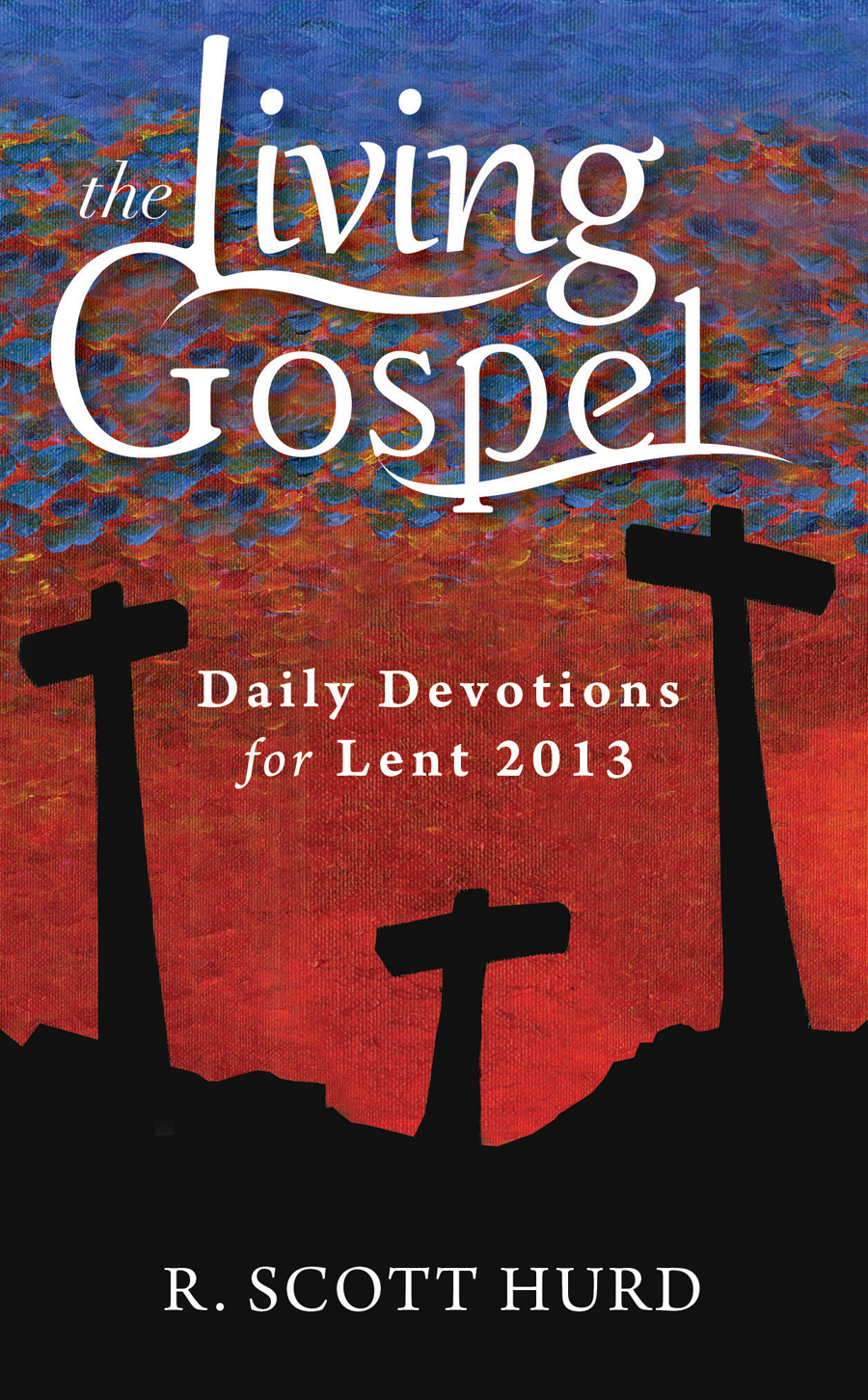
lvg gospelOur community will be using Fr. Scott Hurd’s The Living Gospel to structure our daily devotions this Lent – you should, too!

Daily Devotions for Lent 2013, written by R. Scott Hurd, a priest of the Archdiocese of Washington, offers simple prayers, a pertinent reflection on the gospel reading for the day, and a specific challenge for ongoing spiritual growth. As a popular homilist, speaker, and blogger, Hurd is immersed in day-to-day pastoral care and leadership. In these gospel reflections he gracefully draws the cares, concerns, and joys of his fellow Catholics into the larger story of the Lenten readings and provides a simple blueprint for prayer, reflection, and renewal. (Here.)

Fr. Hurd’s Lenten meditations are truly extraordinary, forged on the anvil of faithful discipleship in both ministry and personal life. You will find here an authentically catholic approach to the renewal of the human spirit in the image of Christ. But Hurd is also an amiable companion for people of all Christian traditions who observe the discipline of Lent. His insights are both literate and practical and will help you to a good Lent

Msgr. Jeffrey Steenson, Ordinary
Personal Ordinariate of the Chair of St. Peter

“The Mission of the Ordinariate”

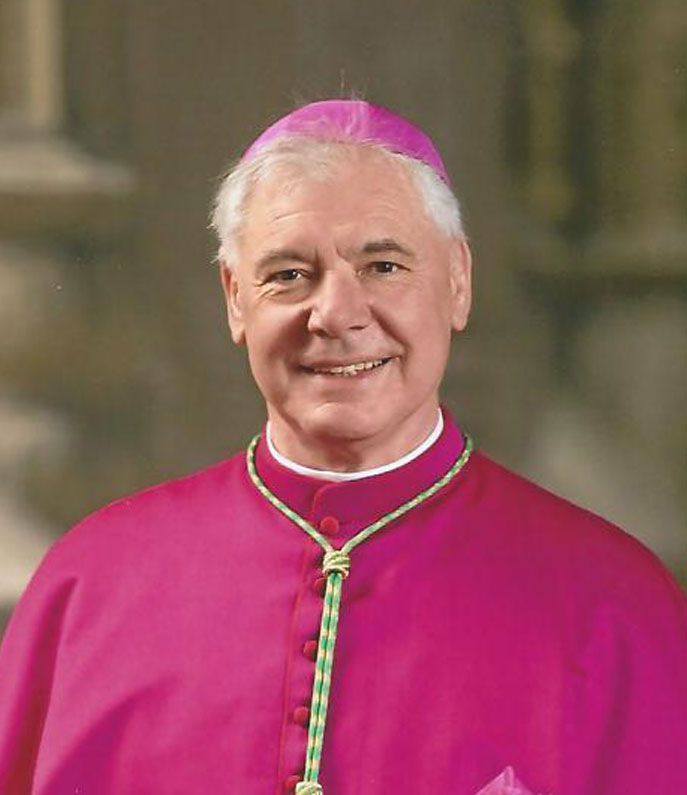
muller-webA special symposium around the theme “the Mission of the Ordinariate” was held on Feb 2, 2013 at St. Mary’s Seminary in Houston, Texas, to mark the one-year anniversary of the erection of the Personal Ordinariate of the Chair of St. Peter.  The Ordinariate was honored by the presence and participation of Archbishop Gerhard Müller, Prefect of the Congregation for the Doctrine of the Faith at the Vatican; Daniel Cardinal DiNardo, Archbishop of Galveston-Houston; Donald Cardinal Wuerl, Archbishop of Washington; the Most Reverend Kevin Vann, Bishop of Orange; and Monsignor Steven Lopes of the Congregation for the Doctrine of the Faith and Secretary to the Anglicanae Traditiones Commission.

Links to (and short excerpts from) the texts of Archbishop Müller’s and Msgr Lopes’ papers (.pdf), as well as a response from Msgr Jeffrey Steenson (Ordinary), are below.

Archbishop Gerhard Müller, Anglicinorum coetibus and Ecclesial Unity” 

The history of the world demonstrates again and again that human beings often go about trying to construct unity by enforcing uniformity. When we think of how this has played out in governments and societies, particularly in the totalitarian regimes of the last century, we see that there is an inherent danger in this conception. Uniformity tends toward the elimination of those who do not conform or comply. Conversely, another way the world tries to achieve oneness is by simply overlooking or ignoring the differences that do exist, even to the point of allowing contradictory claims to truth. But this kind of liberal expansiveness, which is rather a hallmark of “latitudinarian” Anglicanism, brings about a unity that is naïve and ephemeral and is, in fact, unity in name only. It is relativism in the absolute and erodes the very foundation of truth upon which true ecclesial communion is built. 

True communion is rooted in the unity of the Father, Son, and Holy Spirit, a communion in which the diversity of the Persons is constituted and sustained by their essential relations. The Father is not the Son and the Spirit is neither the Father nor the Son, and yet each divine Person is who he is in relation to and in perfect communion with the other. This communion in difference is the key insight as we consider our participation as Church in the Trinitarian mystery. We are all called to discipleship and grafted onto the ecclesial Body of Christ through Baptism. Our unity with one another as members of the one Body does not destroy our distinctiveness. Clergy and lay, religious and secular, married and single, male and female, we all share an equal dignity and are formed into one Church through the profession of “one Lord, one faith and one Baptism.” Our distinctiveness and interdependence is a blessing for the Church and a source of its vitality.  

The unity of the one and the many is a key insight of Anglicanorum coetibus. The unity of the Church is an image of the eternal unity of God, and according to that heavenly pattern, unity is not achieved by an elimination of distinctiveness. The unity of faith, therefore, permits a diversity of expression of that one faith. This is what is meant in the Apostolic Constitution when it says that groups of Anglicans can enter into communion with the Catholic Church while preserving elements of the distinctive Anglican spiritual and liturgical patrimony. The diversity in liturgical expressions, in some governance structures and in parochial culture does not threaten ecclesial communion. The overarching structure which holds together these expressions is the faith of the Church, ever ancient and ever new, and expressed eloquently in the Catechism of the Catholic Church.

Monsignor Steven Lopes, “The Ordinariate’s Mission: Liturgy”

Turning now to Anglican liturgical patrimony, I would observe that “patrimony” and “primacy” are certainly two of the key words  that emerge from even a cursory reading of Anglicanorum coetibus. I would argue that the link between these two theological concepts in that context is not merely a matter of happenstance. Another principle for our reflection today, therefore, concerns the interrelationship of patrimony and primacy. 

The very affirmation that there is such a thing as an Anglican liturgical and spiritual patrimony which enriches the whole Church as “a treasure to be shared” enters Catholic parlance in 1970. On October 25 of that year, Pope Paul VI canonized forty English and Welsh martyrs. During his homily, the Holy Father praised “the legitimate prestige and worthy patrimony of piety and usage proper to the Anglican” Communion, words that were viewed both as a crucial validation of the special relationship between Catholics and Anglicans and as a confirmation of the existence of an Anglican patrimony worthy of preservation. By his authority, Pope Paul cut through the myriad questions of the “how and what” of patrimony’s expression in favor of articulating a key principle: for whatever other ecclesial deficits which result from the lack of full communion between the Catholic Church and the Anglican Communion, the Catholic church acknowledges the work of the Holy Spirit in this body of separated brothers and sisters so as to be able to say that the manner in which the faith was nourished, proclaimed, and celebrated in the Anglican Communion these past 500 years adds to the vitality of the Church and enriches the body Catholic.  

Jumping from 1970 to the Apostolic Constitution  Anglicanorum coetibus, we see Pope Paul’s insight framed in Pope Benedict XVI’s concern “to maintain the liturgical, spiritual and pastoral traditions of the Anglican Communion within the Catholic Church as a precious gift nourishing the faith of the members of the Ordinariate and as a treasure to be shared” (Ap. Const. Anglicanorum coetibus, Art. III). This mandate, articulated and confirmed by papal “primacy,” becomes the task of the  Anglicanae traditiones  interdicasterial commission. The purpose of the commission, therefore, is not to compose a new liturgical text or to devise new liturgical forms, but rather to identify the patrimony from “the liturgical books proper to the Anglican tradition” (Ap. Const. Anglicanorum coetibus, Art. III).

Monsignor Jeffrey Steenson, “Response of the Ordinary”

I very much welcome Archbishop Müller’s call that the Ordinariates must foster a “culture of communion.”  The Prefect’s words resonate powerfully: “Your decision to ‘put out into the deep’ in favor of the unity of Christ’s Church must be developed and extended in the promotion of a culture of communion of which you are the architects.“ 

We are very much aware of these challenges. Amongst ourselves in the Ordinariates we must forge fraternal relationships that we did not always have as Anglicans. We must win the trust of our fellow Catholics and not be drawn into divisive situations. And we must not forget our brothers and sisters who remain Anglicans. Because our consciences have compelled us “to short-circuit the slow path toward organic unity,” we have a special obligation to attend to these relationships with our former colleagues. This is as it should be: our destination is Love itself, and we must strive for all that builds up the Body of Christ. What a great privilege it is to share in our Holy Father’s vision for the building up of the Body of Christ!

“Union with Christ is also union with all those to whom he  gives himself. I cannot possess Christ just for myself; I can belong to him only in union with all those who have become, or who will become, his own. Communion draws me out of myself towards him, and thus also towards unity with all Christians.” (Pope Benedict XVI, Deus caritas est, 14)